
Prompt library · Print
Print design prompts
A print prompt ends as the file a printer prints, so write it the way a print designer briefs a studio: the motif and its mood, whether it repeats or sits in one place, the repeat or print size, the colours by name, and the cloth and printing method.
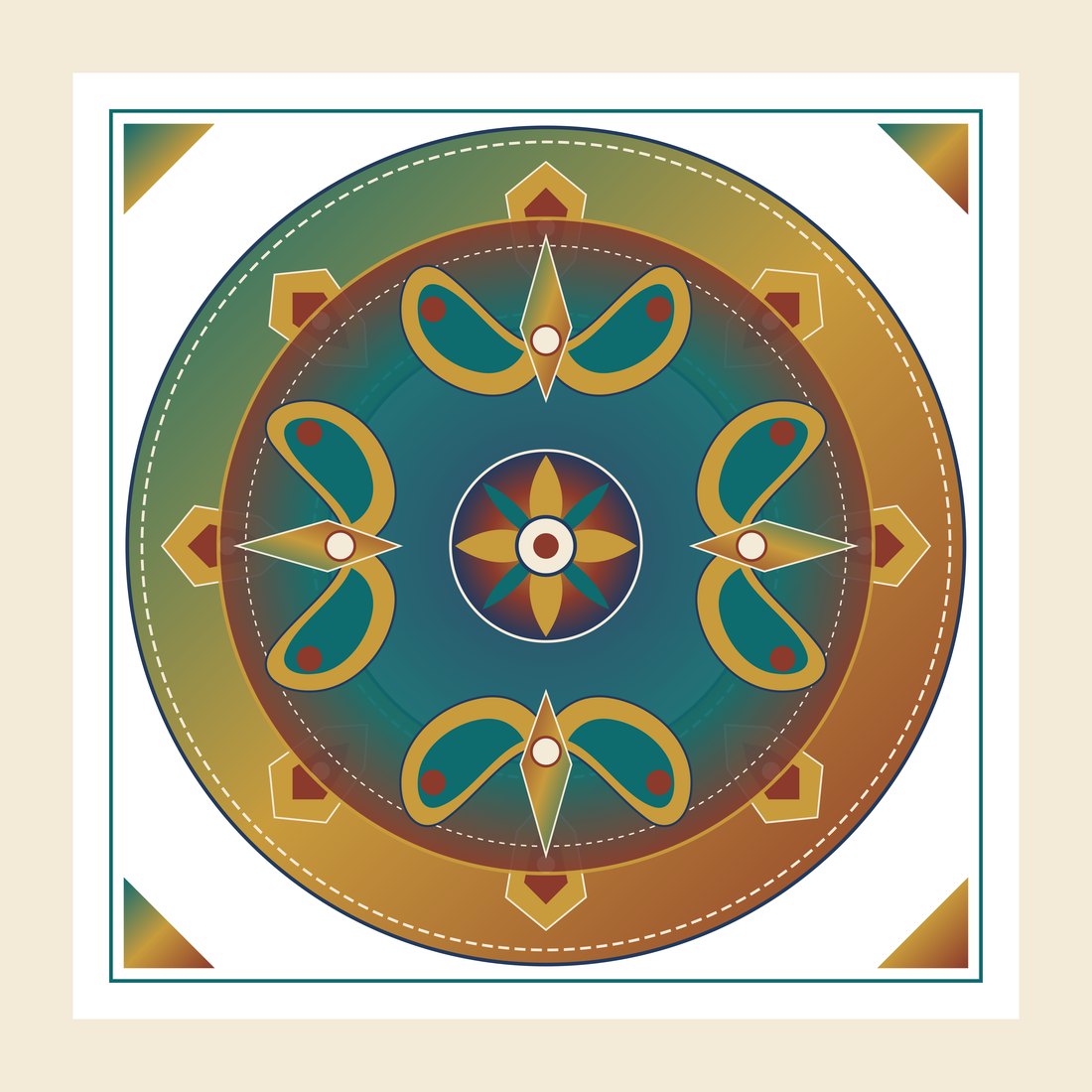
Example brief
A small ditsy floral for a summer dress range. Tiny five-petal flowers about 15 mm across with little leaves and buds, scattered loosely so roughly half of the ground shows and no two flowers touch. Half-drop repeat on a 64 cm tile, so the scatter never lines up into stripes. Six colours on an ivory ground: coral, blush pink, mustard, sage, olive and a soft navy for the flower centres. Cotton voile, digital print.
What a print prompt must say
Four things the file needs. Write them the way you would brief your own team — leave one out and the engine asks before it draws.
01
Repeat or placement
All-over repeat (straight, brick or half-drop), a border, or a single placement print.
02
Size
The repeat tile in cm, or the print size on the panel — the engine checks the repeat at that size.
03
Colours
Name them, or give the count — screens need one separation per colour.
04
Cloth and method
Cotton voile, polyester, silk — and digital, sublimation, direct-to-garment or screen.
Weak prompt
Floral print.
Leaves the engine to guess the size, colours, layout and cloth.
Strong prompt
A small ditsy floral for summer dresses: tiny five-petal flowers about 15 mm across, scattered with small leaves and a few buds so no two neighbours touch and roughly half the ground shows. Half-drop repeat on a 64 cm tile. Six colours on an ivory ground: coral, blush, mustard, sage, olive and a soft navy for the centres. Cotton voile, digital print, so keep the edges crisp and flat.
Names everything the file needs, so it is right first time.
50 print prompts, ready to copy
Each one is a full brief. Copy it, change the details to your own, and paste it into PatternAI.
All-over repeats
12 prompts
Yardage for dresses, shirts and kurtas.
01
A small ditsy floral for a summer dress range. Tiny five-petal flowers about 15 mm across with little leaves and buds, scattered loosely so roughly half of the ground shows and no two flowers touch. Half-drop repeat on a 64 cm tile, so the scatter never lines up into stripes. Six colours on an ivory ground: coral, blush pink, mustard, sage, olive and a soft navy for the flower centres. Cotton voile, digital print.
02
An indigo buti grid in the style of hand block printing, for cotton cambric kurtas. Small four-petal flowers about 25 mm across in a straight grid, each with a slightly uneven edge so it feels hand-stamped, not machine-perfect. Straight repeat on a 30 cm tile. Two colours, deep indigo and an off-white ground. Keep a soft, slightly irregular texture in the indigo, as if the dye did not take evenly.
03
Tropical palm leaves and hibiscus for a resort collection on viscose rayon. Large palm fronds about 30 cm long sweep across the tile, with hibiscus flowers of 10 to 12 cm tucked between them and a few small buds. Brick repeat on a 50 cm tile. Greens from deep jungle to fresh lime, with coral and hot pink for the flowers, all on a clean white ground. Lively and holiday-like, not too busy.
04
An ikat-look diamond pattern for cotton shirts. Rows of stacked diamonds with soft, feathered edges, as if the yarn had been tied and dyed before weaving, the blur running vertically. Straight repeat on a 40 cm tile. Four colours: rust, black, cream and a warm mustard. The blur must stay consistent across the repeat so the joins are invisible.
05
Watercolour roses for a georgette dress. Loose, painterly roses about 8 to 12 cm across, with soft bleeding edges, light washes of colour and a few darker strokes for the petal folds, set among loose leaves. Half-drop repeat on a 64 cm tile. Soft pinks, peach and dusty rose with sage leaves on a pale cream ground. The feel is romantic and airy, with plenty of ground showing.
06
Classic polka dots for a poly crepe blouse range. Round white dots of 8 mm, spaced 20 mm apart centre to centre in a straight grid, on a deep navy ground. Straight repeat. The dots must be perfectly round and evenly spaced, with crisp edges, so the fabric looks clean and timeless.
07
Leopard spots for a satin shirt. Irregular rosettes of black broken rings around a warm brown centre, scattered naturally on a beige ground, each rosette slightly different in shape and size, from 15 to 35 mm. Repeat on a 48 cm tile, with no obvious lines where the tile joins. Three colours: beige ground, tan centres and black rings.
08
A paisley jaal for rayon kurtas. A flowing lattice of paisleys about 70 mm long, linked by curling stems with small flowers at each junction, set in a half-drop repeat on a 60 cm tile. Maroon paisleys with mustard inner detail, teal stems and leaves, on a soft cream ground. Rich, festive and traditional, with fine detail inside every paisley.
09
Abstract brush strokes for cotton lawn shirts. Loose, confident strokes of a wide dry brush, some long and sweeping, some short dabs, overlapping freely across the ground. Repeat on a 70 cm tile. Three colours: charcoal, terracotta and a pale ochre on white. It should look hand-painted, with visible bristle texture in the strokes.
10
A madras-style check in print, for cotton poplin shirts. Uneven stripes in both directions crossing to form a bright check, with thin lines between the broader bands. Repeat on a 15 cm square. Five colours: red, yellow, green, navy and white. Keep the colours flat, with slightly blended crossings where the stripes meet, so it reads like a woven check.
11
A mughal floral jaal with small birds for muslin kurtas. A lattice of curving stems with small open flowers and leaves, and every few cells a tiny bird perched on a stem. Half-drop repeat on a 64 cm tile. Pastel green, soft pink and a muted gold outline on an ivory ground. Fine, delicate linework inside every petal, elegant and calm.
12
Narrow stripes with tiny florals for summer linen shirts. Navy stripes 4 mm wide repeating every 12 mm, and between every second pair of stripes a line of tiny white flowers about 5 mm across. Straight repeat on a 12 cm tile. Navy and white only. Crisp, nautical and simple.
T-shirt and garment placements
8 prompts
A single print placed at size on a panel.
13
A front placement print for a black T-shirt: a tiger’s face looking straight at the viewer, 40 cm wide, centred on the chest. Rendered in bold graphic strokes with orange, white and black stripes, the eyes in a vivid amber. Direct-to-garment print on 180 GSM cotton jersey, so keep the edges clean and allow a little black of the tee to show between stripes.
14
A kids’ T-shirt print, 25 cm across: a cat in an astronaut suit floating in space, holding a small planet, with three stars and a tiny rocket around it. Bright colours on a navy cotton tee: white suit, orange cat, yellow stars and a pink planet. Playful, rounded shapes with thick outlines, easy for children to love.
15
A back print for a hoodie, 35 cm wide: a range of mountains at sunset, with the sun half set behind the tallest peak and long horizontal bands of colour in the sky. Five flat colours for screen printing: deep purple, magenta, orange, yellow and a dark navy for the mountains. Keep each colour a separate flat area so every screen is clean.
16
A chest print, 22 cm wide: the words “Stay Wild” in a loose hand-lettered brush script, with a single fern frond curving underneath. White ink on an olive cotton tee, one colour only. The lettering should feel handmade, with natural variation in stroke thickness.
17
An all-over print for a sublimated sports jersey on polyester. Diagonal speed lines in different shades of blue sweep from the left shoulder to the right hip, breaking into small squares at the edges, with a white panel kept clear on the back for the player number. Blue, sky blue and white. Bold, fast and modern.
18
A tiny pocket print for a white cotton tee, 8 cm across, sitting just above the left chest where a pocket would be. A simple sun with a round smiling face and twelve short rays, drawn in a single warm mustard ink with a slightly hand-drawn line. Minimal, cheerful and easy to wear, for a basics range.
19
A front placement for a rayon kurti: a tall bouquet of lilies rising from the hem to the chest, 90 cm tall, the stems gathered at the bottom and the flowers opening wider toward the top. Soft white lilies with peach centres, sage leaves, on a powder blue ground. Graceful and elegant, a single placement, not a repeat.
20
A print across the back yoke of a cotton shirt, 50 cm wide and 15 cm deep: a band of birds in flight, about twenty swallows in different positions, denser in the middle and thinning out at both ends. One colour, navy on white. Light and airy.
Saree, dupatta and border prints
8 prompts
Long cloth with borders and end panels.
21
A dupatta with a block-print style border, 2.5 m long and 1 m wide. A 10 cm border runs along both long edges: a row of small flowers between two bands of tiny triangles. The body has small scattered butis. Two colours, red and black, on a cream cotton ground, with the slightly uneven look of a hand-printed block.
22
A georgette saree, 5.5 m. The body is covered with small paisley butis, 3 cm tall, spaced 8 cm apart in a staggered grid. A 20 cm border runs along one edge: a band of large paisleys between two narrow lines. The pallu repeats the border motifs at a larger scale. Magenta ground with a gold-look ink for the butis and border.
23
A crepe saree pallu: a peacock panel 80 cm long, with two peacocks facing each other, tails flowing down and filling the panel, framed by a 10 cm border of small leaves on both sides that continues along the saree. Peacock blue, emerald and gold on a deep teal ground. Rich and festive.
24
A chiffon dupatta, 2.25 m, with a leheriya-style diagonal wave all over: thin waving stripes of 5 mm in two alternating colours, running at 45 degrees across the whole cloth. A 6 cm border on all four sides in a gota-look pattern of small gold squares. Yellow and orange waves with a gold border.
25
A modal stole, 2 m long and 70 cm wide, with a floral border on both ends only: a 25 cm deep band of roses, buds and leaves, and the rest plain. Pastel pink roses with sage leaves on an ivory ground. The border must sit square at both ends, and the plain middle stays completely clean.
26
A tree-of-life panel for a cotton dupatta end, 70 cm tall, in a kalamkari-inspired style. A slender tree with flowering branches, birds perched and small animals at the base, every element outlined in fine black lines and filled in earthy colours: madder red, rust, ochre and indigo on a natural cotton ground.
27
A georgette dupatta, 2.5 m, with a bandhani-look dot pattern all over: tiny tie-dye dots arranged in small circles of seven, each dot slightly soft at the edges like a real tie. A plain 8 cm border along the edges. Bright yellow dots on a red ground.
28
A silk crepe saree with a temple border 15 cm deep printed on both long edges: a row of triangular temple tops between narrow lines and small dots. The body stays plain. 5.5 m long. Deep maroon body with a gold and green border.
Scarves and engineered prints
6 prompts
Prints drawn once for one piece, not repeated.
29
A 90 cm square silk scarf, printed once, not repeated. A formal garden seen from above, divided into four quarters by crossing paths, each quarter with a fountain and flowering beds, all inside a 10 cm border of climbing roses. Eight colours: greens, rose, ivory, gold and a deep blue for the fountains.
30
A 70 cm square polyester twill scarf: a large compass rose in the centre with eight points, framed by a 6 cm navy border with small nautical knots at the corners. Navy, gold, white and a little red for the north point.
31
A long modal stole, 180 cm by 70 cm, printed as one piece: a soft ombre from deep teal at one end to warm sand at the other, scattered with small gold stars that thin out as the colour lightens.
32
A silk pocket square, 30 cm, printed once. A paisley medallion in the centre, built from four paisleys curling around a small rosette, with a thin border of small dots and a contrasting rolled-edge colour. Burgundy, navy and gold on a cream ground, so it pairs with both a navy and a grey suit.
33
A classic paisley bandana, 55 cm square, on cotton. A central medallion, paisleys in two rings around it, and a border of small paisleys and dots, all in the traditional layout. Red ground with white and black details. Slightly worn, soft-edged print look, as if washed many times.
34
A rayon sarong panel, 150 by 110 cm, printed once. Large hibiscus flowers of 20 to 30 cm spread across the centre with their leaves, and a 12 cm border of smaller leaves running all around the edge. Coral, hot pink, deep green and a little yellow on a turquoise ground. Bright and holiday-ready.
Home textile prints
6 prompts
Wide repeats for bedding, curtains and cushions.
35
A bedsheet print for 270 cm wide cotton percale: a large floral jaal with open peonies about 15 cm across, linked by curling stems and leaves. Half-drop repeat on a 64 cm tile. Six colours: rose, blush, cream, sage, olive and a soft grey outline, on an off-white ground. Calm and restful for a bedroom.
36
Curtain fabric on cotton duck: tall bamboo stems running vertically, about 90 cm tall, with clusters of narrow leaves at the joints. Straight repeat of 90 cm. Greens from pale sage to deep moss on a warm cream ground. The stems must line up at the repeat so the curtains look seamless when hung.
37
A cushion cover set on canvas: a single geometric medallion placed in the centre, 40 cm across, made of interlocking diamonds and a small star at its heart. Three colours: indigo, rust and cream. Each cushion carries one medallion, not a repeat.
38
Kids’ bedding on cotton: friendly dinosaurs of different kinds walking among palm trees, little volcanoes and trails of footprints. Repeat on a 40 cm tile. Bright colours — green, orange, purple, yellow and sky blue — on a white ground. Rounded shapes, big eyes and happy faces, so it feels fun rather than scary.
39
A tablecloth, 150 by 230 cm, printed once: a 20 cm border of lemons, leaves and small white blossoms all around a plain white centre, the corners turning neatly with a lemon cluster at each one. Lemon yellow, two greens and white.
40
A quilt cover on cotton: a patchwork look of 10 cm squares, each square a different small pattern of dots, stripes, checks and tiny flowers. Repeat on a 30 cm tile. Indigo and white only, like a quilt made from old indigo cloths.
Screen-print ready designs
4 prompts
Few, flat colours — one separation per colour.
41
A two-colour screen print, 30 cm: a bold lotus drawn in thick outlines with a flat red fill in the centre petals. White and red on a black cotton tee. Keep each colour as a clean flat shape, with no gradients or halftones.
42
A three-colour retro sunset with palm trees, 28 cm: a half sun made of horizontal bands, two palm trees in silhouette in front of it. Orange, pink and black on a white tee. Flat shapes with clear gaps between colours for screen printing.
43
A single-colour typographic print for a natural cotton tote bag. The words “Made in India” in a strong condensed lettering, 25 cm wide, stacked on two lines with a small five-pointed star between the words. Black ink only, screen printed, so keep it to one clean flat colour with no fine hairlines.
44
A four-colour floral bouquet for canvas tote bags, 35 cm. Roses, daisies and leaves gathered into a loose bunch with a ribbon at the stems, drawn in flat fills with simple outlines and no shading. Red, yellow, green and black. Each colour kept as a separate shape with a slight overlap, so every screen registers cleanly.
Full studio briefs
6 prompts
Long-form briefs, the way a print studio writes them — one design, then distinct takes on it.
45
A seamless all-over floral print on a warm blush-cream ground, in a 64 cm half-drop repeat. Large hand-drawn tropical blooms — hibiscus, frangipani and protea at 12 to 16 cm across — with flowing banana and monstera leaves. Seven colours: crimson, burgundy, orange, coral, blush pink, forest green and olive green. Fine curved linework inside every petal and leaf, organic connecting stems, and a balanced scattered placement with roughly 30% of the ground showing. Flat, graphic, elegant and vintage-inspired, for premium fashion fabric.
46
The same tropical floral and seven-colour palette on blush-cream, but in a 32 cm straight repeat with the density raised so only about 15% of the ground shows. The blooms shrink to 8 to 10 cm and sit shoulder to shoulder, with leaves filling every gap so the ground reads as a thin outline rather than open space. Keep the fine internal linework at full detail. Flat and graphic.
47
A one-way directional floral on an ivory ground in a 45 cm half-drop. Blooms climb continuous diagonal stems running from lower left to upper right at a steady 30-degree lean — heliconia, ginger flower and small hibiscus along the vine, with fern and palm fronds breaking the diagonal. A warmer palette of six: terracotta, rust, apricot, dusty coral, deep olive and sage. Fine curved linework, flat colour, for shirting.
48
A tropical floral inverted onto a deep forest-green ground, 64 cm half-drop. Large blooms of 14 to 18 cm in blush pink, coral, apricot, ivory and burgundy read as light shapes on the dark ground, with olive and near-black leaves sinking back into it. The fine linework inside the petals switches to a pale tone so it stays visible on dark. Seven colours plus the ground. Dramatic and rich, for evening wear on satin.
49
An engineered placement print for a 112 cm cotton width. A dense 22 cm floral border runs along the lower selvedge — large hibiscus, protea and banana leaves packed edge to edge, stems interlocking horizontally — and rises into a scattered field of the same flowers at half the scale on blush-cream, with the density falling off gradually over the first 30 cm. The field repeats seamlessly above, and the border carries its own repeat along the length.
50
A seamless tropical floral drawn like a vintage botanical plate, 45 cm straight repeat. The linework becomes the main element — dense fine hatching inside every petal, full vein structure drawn on the monstera and fern, stems with visible hand-drawn weight. Colour is held back to four flat fills: muted coral, faded burgundy, antique olive and a warm cream ground, with the linework in a deep brown. Quiet, scholarly and refined, for linen.
Prompts for the other engines
Every engine has its own recipe — what its machine file needs to know.
Make your print design
Try PatternAI on your own designs free for 7 days. After that you pay only for what you produce.
Paste a prompt
Copy any prompt above, change the details to yours, and get the design and the machine file.
Start free