
Prompt library · Schiffli
Schiffli design prompts
A schiffli prompt becomes a stitch file and its machine functions, so write it the way a lace designer briefs the puncher: the kind of lace or yardage, the motifs and how they link, the repeat, the ground fabric, and any boring, cording or sequins.
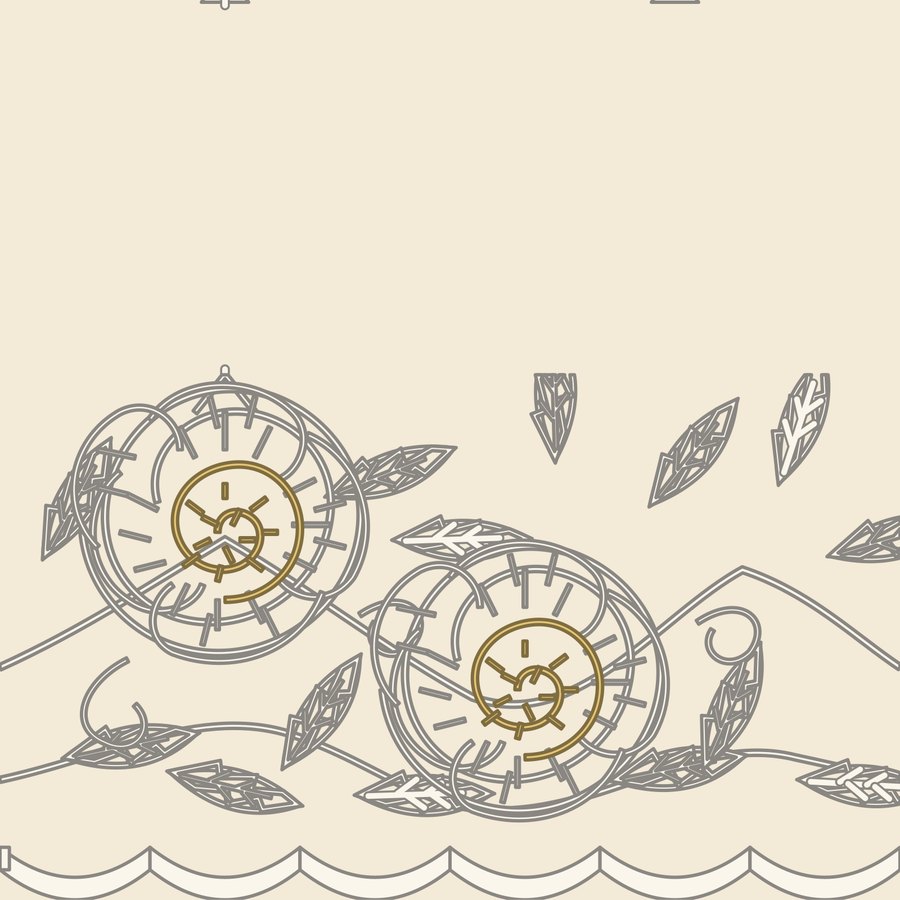
Example brief
A guipure lace border, 8 cm deep, for a bridal gown hem. Open roses of about 5 cm alternating with pairs of leaves, every motif joined to its neighbours by fine bars so the lace holds together once the backing dissolves. A scalloped lower edge following the shape of the roses. Ivory thread on soluble backing.
What a schiffli prompt must say
Four things the file needs. Write them the way you would brief your own team — leave one out and the engine asks before it draws.
01
Kind
Guipure or chemical lace, eyelet, all-over yardage, a border or a scalloped edge.
02
Repeat
The repeat must join across the frame at the needle spacing.
03
Ground
Cotton voile, net, organza — or a soluble backing for chemical lace.
04
Functions
Boring for eyelets, cording, sequins — they travel with the file.
Weak prompt
Lace.
Leaves the engine to guess the size, colours, layout and cloth.
Strong prompt
A guipure lace border, 8 cm deep, for the hem of a bridal gown. Open roses about 5 cm across alternating with pairs of leaves, every motif joined to its neighbours by fine bars so the lace holds together once the backing is washed away. A scalloped lower edge that follows the roses. Ivory thread on soluble backing, with a raised cord outlining each rose.
Names everything the file needs, so it is right first time.
33 schiffli prompts, ready to copy
Each one is a full brief. Copy it, change the details to your own, and paste it into PatternAI.
Guipure and chemical lace
8 prompts
Lace stitched on a backing that dissolves.
01
A guipure lace border, 8 cm deep, for a bridal gown hem. Open roses of about 5 cm alternating with pairs of leaves, every motif joined to its neighbours by fine bars so the lace holds together once the backing dissolves. A scalloped lower edge following the shape of the roses. Ivory thread on soluble backing.
02
A chemical lace all-over with roses and leaves in a 30 cm repeat: roses of 6 to 8 cm with layered petals, linked by curling stems and small leaves, and a fine mesh of bars filling every gap so the whole piece is self-supporting. Ivory thread on soluble backing, for a dress overlay.
03
A guipure lace collar piece, 25 cm wide, shaped to sit around a round neck: a row of small flowers and leaves with a scalloped outer edge and a straight inner edge for sewing on. Joined throughout by bars. White thread on soluble backing.
04
A chemical lace trim, 5 cm deep, for sleeves and hems: small daisies of 2.5 cm in a row, each linked to the next by two fine bars, with a picot edge. Ivory thread. Sold by the metre, so the repeat must join seamlessly.
05
A single guipure motif for appliqué: a butterfly 12 cm across, wings open, with a lace fill inside each wing and a raised cord outlining the wings and body. Ivory thread on soluble backing, to be cut out and placed by hand.
06
A chemical lace yoke for a blouse, 30 cm wide, shaped to sit around the neck. A geometric lattice of small diamonds with a tiny four-petal flower inside each, the outer edge finished in a row of scallops and the inner edge straight for sewing to the neckline. Self-supporting with fine bars throughout, so it holds its shape once the backing dissolves. Off-white thread.
07
Bridal guipure lace with a heavy floral border and a light field: a 20 cm border of dense roses, leaves and scrolls, rising into an open field of small scattered flowers linked by fine bars. Ivory thread with a raised cord on the border roses.
08
A chemical lace for a kurti hem, 12 cm deep, sold by the metre. A row of paisleys about 9 cm tall, each filled with an open lace mesh and outlined in a raised cord, linked by small leaves and fine bars, with a scalloped lower edge that follows the curve of each paisley. White thread, the repeat joining seamlessly along the length.
Eyelet and broderie anglaise
6 prompts
Bored holes, overcast and spaced across the repeat.
09
An all-over eyelet on white cotton voile: small bored eyelets of 4 mm arranged in little five-hole flowers, each flower with two satin leaves, scattered in a half-drop so no straight lines form. White thread, tone on tone. Light and airy for summer dresses.
10
Classic broderie anglaise yardage: a white eyelet lattice on white cotton, with oval and round eyelets forming a trellis of small flowers, and a scalloped edge along one selvedge. The eyelets are bored and overcast cleanly so they stay open after washing.
11
Eyelet flowers in a diamond grid on cotton lawn, 10 cm repeat: each flower is a centre eyelet surrounded by six petal eyelets, set at the points of a diamond grid with a fine satin line joining them. White on pale blue.
12
An eyelet border 15 cm deep on white cotton for skirt and curtain hems. A vine of satin-stitch leaves runs along the border with eyelet flowers of five holes every 8 cm and small round holes scattered between them, finishing in a scalloped lower edge with a dense satin cutting line. White on white.
13
Kids’ dress fabric with tiny eyelet hearts all over: hearts of about 1.5 cm, each made of a ring of small bored holes with a satin outline, scattered evenly in a half-drop 5 cm apart. White thread on soft pink cotton poplin. Light, sweet and washable, for summer frocks.
14
Eyelet stripes on white cotton voile: a 2 cm band of round eyelets alternating with a 3 cm band of small satin-stitch leaves, the bands running across the fabric and repeating. White on white, light and airy for summer blouses and nightwear, with every eyelet bored and overcast cleanly.
Scalloped edges and borders
6 prompts
Edges with a cutting line.
15
A scalloped edge 5 cm deep for the hem of a cotton blouse. Scallops 4 cm wide finished with a dense satin edge that can be cut cleanly along the outer line, a small satin leaf sitting inside each scallop. White thread on white cotton, the scallops evenly spaced so the edge looks crisp and handmade.
16
A saree border 10 cm deep on georgette, running the full length of the saree. A row of paisleys about 7 cm tall sits inside a run of scallops, with a dense satin cutting edge along the scallops so the border can be trimmed into a shaped edge. Gold thread on a deep red ground, light enough for georgette.
17
A dupatta edge 6 cm deep on chiffon, running along all four sides. A gentle scallop 5 cm wide with a small satin dot inside each curve, and a fine cutting line along the outer edge. Light density for sheer cloth, so it does not pucker. Pastel thread matching the ground.
18
A curtain border 20 cm deep on white voile. A climbing vine with leaves and small open flowers rises from the hem and finishes in a deep scallop along the lower edge, with a few eyelets in the flower centres. White on white, light enough to let the sunlight through.
19
A sleeve border 4 cm deep for a cotton blouse: a row of tiny scallops 2 cm wide with a fine satin edge and a small eyelet in each scallop. White thread on white cotton. Simple and delicate, the scallops even all the way around the sleeve.
20
A petticoat hem border 15 cm deep on white cotton: two rows of small round eyelets above a deep scallop, with a satin leaf between each pair of eyelets. Classic and clean, the scallop finished with a dense satin cutting edge.
All-over embroidered yardage
8 prompts
Embroidered fabric by the metre.
21
All-over small florals on soft net, 20 cm repeat: small five-petal flowers of 2 cm, each with two leaves, scattered in a half-drop so no straight lines form. Two thread colours, ivory flowers and soft gold leaves. Light density so the net stays soft and drapes, for a dupatta or a dress overlay.
22
Embroidered georgette yardage for festive kurtas: small flower butis of 3 cm, each with a single sequin stitched at its centre, spaced 8 cm apart in a staggered grid. Gold thread with gold sequins on a black ground. Light enough that the georgette still flows.
23
Organza yardage with a cording jaal for lehengas and dupattas: a lattice of curving cord lines forming cells of about 10 cm, with a small satin flower at every junction. Gold cord on ivory organza. Crisp, light and festive.
24
Cotton yardage with embroidered polka dots: satin dots 15 mm across in a straight grid, 4 cm apart. White thread on navy cotton poplin, crisp and clean, for summer shirts and dresses. Each dot perfectly round and evenly filled.
25
Net yardage for festive wear: paisleys of 8 cm, each traced with a raised gold cord and filled with a light inner pattern of small dots and a tiny flower. Gold thread on black net, set in a half-drop so the paisleys face different ways in alternate rows.
26
Kurta fabric with an embroidered stripe every 10 cm: a running row of small satin leaves 2 cm long, all leaning the same way, with a fine stem line linking them. White thread on pale blue cotton. Fresh, simple and summery.
27
Bridal net with heavy floral embroidery and sequins all over: roses, buds and leaves densely worked in satin and fill stitches, with sequins scattered through the flowers to catch the light. Ivory and gold thread on ivory net, for a bridal lehenga or gown.
28
Chanderi yardage with small embroidered coins: round satin coins of 1.5 cm in gold, scattered in a half-drop 6 cm apart. Light density so the sheer chanderi stays soft and translucent. For kurtas and dupattas with a festive shimmer.
Full studio briefs
5 prompts
Long-form briefs, the way a lace studio writes them — one design, then distinct takes on it.
29
A large-scale all-over botanical on white cotton voile: blossoms of roughly 14 cm with irregularly lobed heart-clover outlines traced in a double-line satin cord about 3 mm wide, the inside of each flower filled with an abstract pollen burst of bored ovals and dots on fine radiating straight stitches. Smaller wavy scalloped blooms of 6 cm carry loose clusters of bored dots. Long tapering leaves filled with dense horizontal rib stitching branch from thin double-line vines that loop and curl to link every element, and small berry sprigs of bored dots fill the open spaces. No two blossoms filled the same way within the repeat.
30
The same voile composition with the blossom outline resolved into a conventional rounded five-lobed flower rather than the ambiguous heart-clover shape, so each bloom reads at once as a flower. The double-line cord follows a smoother curve with even lobe depth, and the pollen burst sits centred. The design loses some of its sketch-like quality and gains clarity from a distance — a more commercial take on the same idea.
31
The blossom outline sharpened into a six-pointed star with straight-sided lobes and sharp tips, so the hand-drawn feel is deliberately replaced by something graphic. The satin cord runs in straight segments that meet at hard points, and the pollen burst becomes a radial pattern lined up with the star’s own axes. Vines and leaves stay organic, so the design holds a deliberate tension between a geometric flower and a natural setting.
32
The blossom reduced to three large, deeply cut lobes, so each bloom becomes a bold trefoil with a big open centre and the pollen burst can spread across a much larger area. Fewer lobes also means a much lower stitch count, making this the quickest blossom in the set to produce and the boldest to read. Same voile ground, vines and leaves.
33
The double-line outline replaced by a single heavy satin cord of 5 mm, so each flower is drawn with one continuous stroke instead of a channel between two lines. The silhouette becomes simpler and heavier, and the relief gathers into one ridge. On voile this also lowers the risk of puckering, since one wide cord spreads tension more evenly than two narrow ones with a gap between them.
Prompts for the other engines
Every engine has its own recipe — what its machine file needs to know.
Make your schiffli design
Try PatternAI on your own designs free for 7 days. After that you pay only for what you produce.
Paste a prompt
Copy any prompt above, change the details to yours, and get the design and the machine file.
Start free